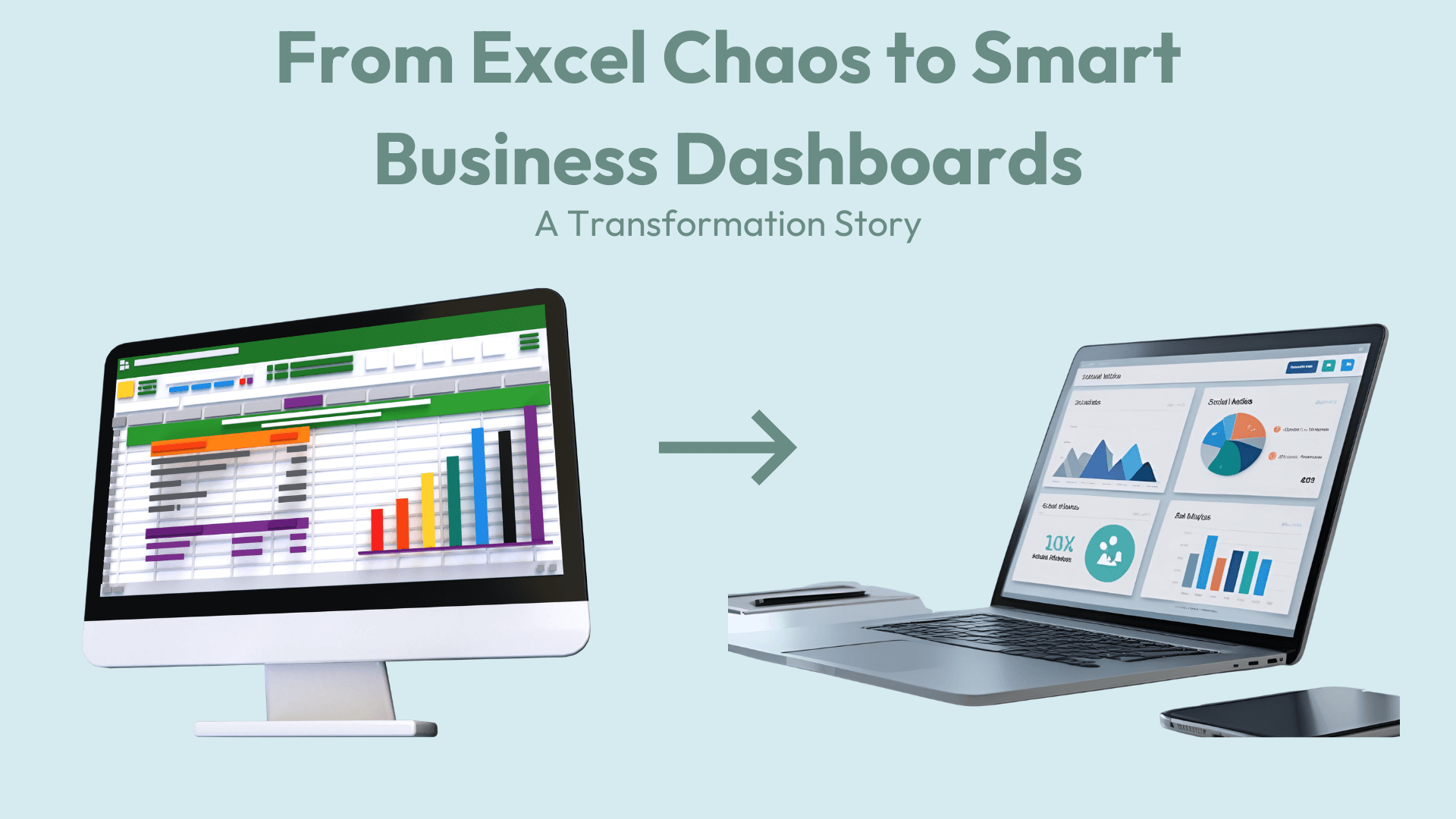
From Excel Chaos to Smart Business Dashboards: A Transformation Story
|
Nidhi Goda
Introduction
Many Indian mid-sized companies do not struggle because they lack effort or sales. They struggle because information is scattered across spreadsheets, WhatsApp messages, and different software. This creates confusion, slow reporting, and delayed decisions.
This story explains how one growing company moved from Excel-based working to a smart dashboard system, what improvements they saw, and why modern visibility is important for scaling smoothly.
Table Of Content
1. From Excel to Everyday Problems
2. What Business Visibility Really Means
3. How Connected Systems Improve Data Accuracy
4. Smart Dashboards Instead of Manual Reporting
5. Better Forecasting and Planning
6. Impact on Leadership and Teams
7. Why This Matters for Mid-Sized Indian Companies
8. Features to Look for in Business Dashboards
1. From Excel to Everyday Problems
Excel sheets are great in the beginning. But as a company grows, so do the challenges. Teams start facing issues like:
Multiple versions of the same file
Mistakes due to manual data entry
Delayed monthly reports
Conflicting numbers between departments
No clear picture of sales, inventory, or finance.
Decision making becomes slow because everyone depends on someone else to send updated file.
2. What Business Visibility Really Means
Business visibility is not just checking sales or bank balance. It means having a clear and updated picture of:
Sales performance and pipeline
Inventory and stock movement
Pending payment collections
Supplier payments and expenses
Production or service capacity
Profitability from different products or customers
This helps management make decisions confidently without waiting days for reports.
3. How Connected Systems Improve Data Accuracy
Before dashboards can show meaningful information, data needs to be connected. This is where systems like ERP, CRM, and stock management tools help.
When sales, accounts, inventory, and operations are linked, it creates:
One common platform for all teams
Real-time updates
Fewer mistakes
No duplicate data entry
This removes confusion and saves a lot of follow-up time.
4. Smart Dashboards Instead of Manual Reporting
Once data is connected, dashboards replace manual reports.
Companies can instantly see:
Daily or weekly sales
Pending customer payments
Inventory aging and stock shortage
Cash position and expenses
Production status and delivery timelines
Reports that earlier took hours or days are now available anytime.
5. Better Forecasting and Planning
With properly connected data, companies can plan better. For example:
Finance teams can plan cash flow
Purchase teams can avoid overstocking
Sales teams can see which customers need follow up
Founders can plan growth targets
Operations can estimate delivery timelines.
This reduces guesswork and improves confidence.
6. Impact on Leadership and Teams
With Excel-based reporting, leadership often takes decisions late or with incomplete information. With dashboards, leaders can:
Check performance without asking anyone for reports
Analyse trends from previous months
Plan budgets and stock levels
Control expenses and pending collections
Take decisions faster than competitors
Data becomes useful for everyone, not just accountants.
7. Why This Matters for Mid-Sized Indian Companies
Mid-sized Indian companies usually have growing complexity such as:
Higher order volumes
More product categories
Multiple sales channels
Increasing suppliers and customers\
Faster decision expectations
Dashboards help founders maintain control and reduce financial stress as the business grows.
8. Features to Look for in Business Dashboards
While choosing dashboards, companies should look for:
Real-time data
Easy-to-understand charts and reports
Mobile-friendly access
Good integration with ERP, CRM and accounts
Role-based access for team members
Alerts and reminders for key activities
This ensures dashboards are useful for daily operations, not just monthly meetings.
9. How Ambibuzz Supports Business Transformation
Ambibuzz helps businesses move from spreadsheet-based working to structured systems. Our approach focuses on:
Understanding current working style
Identifying reporting and data gaps
Connecting ERP, CRM and finance systems
Setting up dashboards that leadership actually uses
Training teams so they feel comfortable with the new system
This helps businesses achieve faster decisions, better control over money, and more confidence in planning.
10. Final Thoughts
Excel is good for starting small. But when a business grows, founders need real-time clarity, better planning, and faster decisions. Smart dashboards turn data into a strength instead of a headache. For mid-sized companies in India, this change is not just about technology. It is about running business with confidence and control.
1. From Excel to Everyday Problems
Excel sheets are great in the beginning. But as a company grows, so do the challenges. Teams start facing issues like:
Multiple versions of the same file
Mistakes due to manual data entry
Delayed monthly reports
Conflicting numbers between departments
No clear picture of sales, inventory, or finance.
Decision making becomes slow because everyone depends on someone else to send updated file.
2. What Business Visibility Really Means
Business visibility is not just checking sales or bank balance. It means having a clear and updated picture of:
Sales performance and pipeline
Inventory and stock movement
Pending payment collections
Supplier payments and expenses
Production or service capacity
Profitability from different products or customers
This helps management make decisions confidently without waiting days for reports.
3. How Connected Systems Improve Data Accuracy
Before dashboards can show meaningful information, data needs to be connected. This is where systems like ERP, CRM, and stock management tools help.
When sales, accounts, inventory, and operations are linked, it creates:
One common platform for all teams
Real-time updates
Fewer mistakes
No duplicate data entry
This removes confusion and saves a lot of follow-up time.
4. Smart Dashboards Instead of Manual Reporting
Once data is connected, dashboards replace manual reports.
Companies can instantly see:
Daily or weekly sales
Pending customer payments
Inventory aging and stock shortage
Cash position and expenses
Production status and delivery timelines
Reports that earlier took hours or days are now available anytime.
5. Better Forecasting and Planning
With properly connected data, companies can plan better. For example:
Finance teams can plan cash flow
Purchase teams can avoid overstocking
Sales teams can see which customers need follow up
Founders can plan growth targets
Operations can estimate delivery timelines.
This reduces guesswork and improves confidence.
6. Impact on Leadership and Teams
With Excel-based reporting, leadership often takes decisions late or with incomplete information. With dashboards, leaders can:
Check performance without asking anyone for reports
Analyse trends from previous months
Plan budgets and stock levels
Control expenses and pending collections
Take decisions faster than competitors
Data becomes useful for everyone, not just accountants.
7. Why This Matters for Mid-Sized Indian Companies
Mid-sized Indian companies usually have growing complexity such as:
Higher order volumes
More product categories
Multiple sales channels
Increasing suppliers and customers\
Faster decision expectations
Dashboards help founders maintain control and reduce financial stress as the business grows.
8. Features to Look for in Business Dashboards
While choosing dashboards, companies should look for:
Real-time data
Easy-to-understand charts and reports
Mobile-friendly access
Good integration with ERP, CRM and accounts
Role-based access for team members
Alerts and reminders for key activities
This ensures dashboards are useful for daily operations, not just monthly meetings.
9. How Ambibuzz Supports Business Transformation
Ambibuzz helps businesses move from spreadsheet-based working to structured systems. Our approach focuses on:
Understanding current working style
Identifying reporting and data gaps
Connecting ERP, CRM and finance systems
Setting up dashboards that leadership actually uses
Training teams so they feel comfortable with the new system
This helps businesses achieve faster decisions, better control over money, and more confidence in planning.
10. Final Thoughts
Excel is good for starting small. But when a business grows, founders need real-time clarity, better planning, and faster decisions. Smart dashboards turn data into a strength instead of a headache. For mid-sized companies in India, this change is not just about technology. It is about running business with confidence and control.
Table Of Content
1. From Excel to Everyday Problems
2. What Business Visibility Really Means
3. How Connected Systems Improve Data Accuracy
4. Smart Dashboards Instead of Manual Reporting
5. Better Forecasting and Planning
6. Impact on Leadership and Teams
7. Why This Matters for Mid-Sized Indian Companies
8. Features to Look for in Business Dashboards
Table Of Content
1. From Excel to Everyday Problems
2. What Business Visibility Really Means
3. How Connected Systems Improve Data Accuracy
4. Smart Dashboards Instead of Manual Reporting
5. Better Forecasting and Planning
6. Impact on Leadership and Teams
7. Why This Matters for Mid-Sized Indian Companies
8. Features to Look for in Business Dashboards
Popular Tags